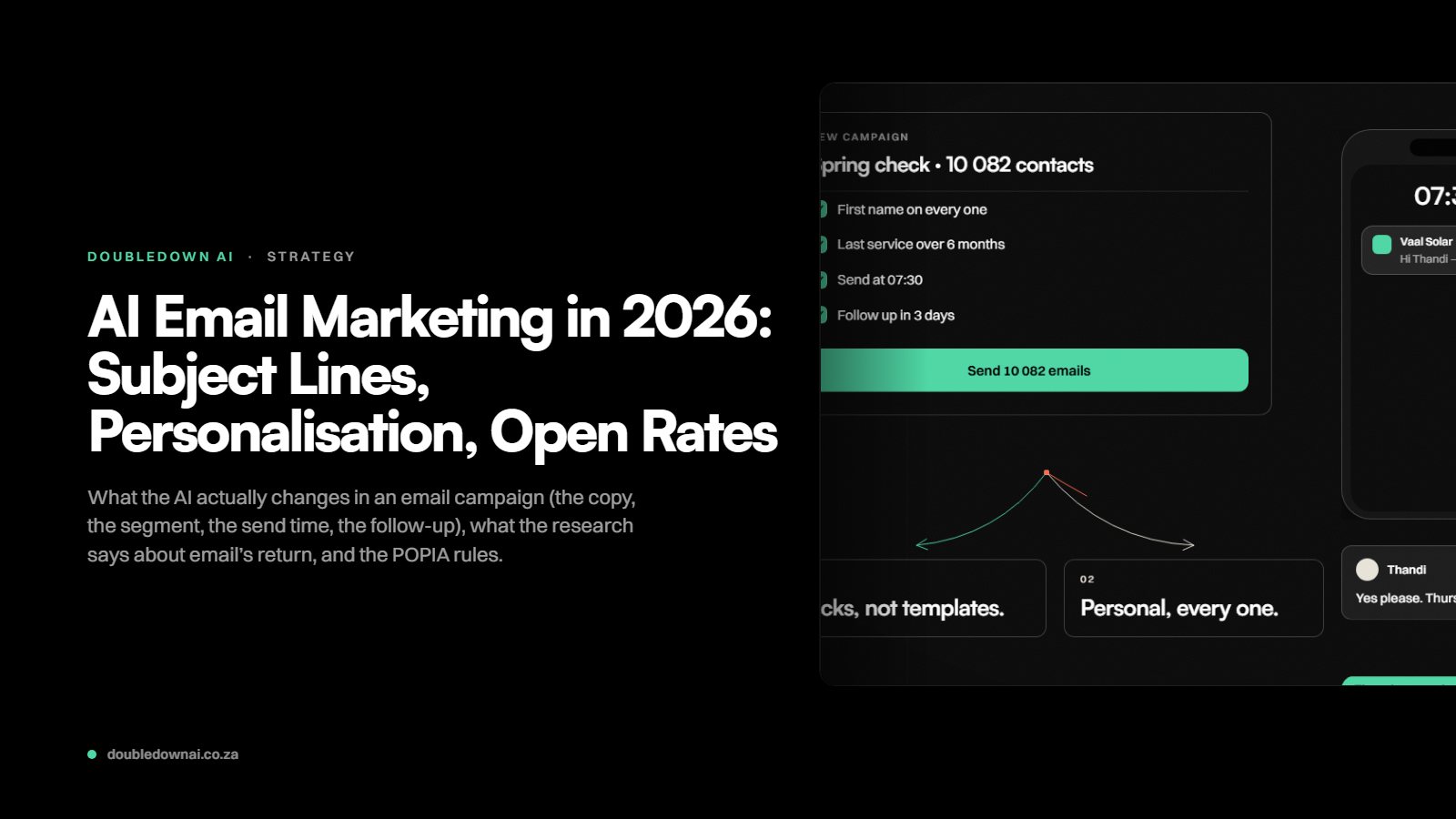
Is email still worth it?
Yes, by the numbers. Litmus’s State of Email survey of more than 2,000 marketing professionals put the return at $36 for every $1 spent 1. For a small South African business the reason is simpler than the ratio: the list is yours, it costs nothing per send, and the customer reads it on the phone they already hold. Social reach is rented; the list is owned.
What does AI actually change?
| Part of the campaign | Before | With AI |
|---|---|---|
| Subject line and copy | One version for everyone | Written per recipient from what you know about them: name, last purchase, area |
| Segment | The whole list, or a filter someone set up once | Chosen by behaviour: last service over six months, opened but did not click, bought X not Y |
| Send time | When you pressed go | When each recipient tends to open |
| Follow-up | If somebody remembers | Automatic, three days later, only to those who did not respond |
| Replies | Land in an inbox | A reply that books is booked; the rest are routed |
The subject line is the visible part and the least important. The segment and the follow-up are where the return comes from, because they send fewer emails to the people more likely to act.
What does “personalised” mean honestly?
Not a first name in the subject line. It means the email says something true about this recipient: the panel installed eight months ago is due a check; the last order was a 150-litre geyser; the branch nearest them opens Saturdays. A mass-email product that writes ten thousand emails, each from the recipient’s own record, is personalised. A template with a merge field is not, and recipients can tell.
What does POPIA require?
Section 69 of the Protection of Personal Information Act governs direct marketing by electronic means. In short: the recipient must have consented, or be an existing customer being offered similar products with the chance to opt out at collection; every message must carry a working opt-out; and a bought list of strangers is not consent. The Information Regulator can fine up to ten million rand and has begun to 2 3. A product that captures consent, honours an unsubscribe in one click and keeps the record is doing the compliance for you.
Why do emails land in spam?
Plumbing, not copy. SPF, DKIM and DMARC records tell receiving servers the mail is really from you; a domain that has never sent volume needs warming up; spam-trigger scanning catches the words that filters dislike. None of this is AI, and all of it decides whether the AI-written email is read at all. Our mass-email product sets the records up as part of the build.
What about open rates?
Treat them as a rough signal, not a score. Mail clients that pre-load images inflate opens, and a campaign judged on opens alone rewards the clickbait subject line over the useful one. Measure replies, bookings and unsubscribes; those are the numbers that cost or earn money, and the ones a personalised campaign moves.
What should a small business send?
Fewer, truer emails. The service reminder that is actually due. The offer to the segment that bought the thing it relates to. The follow-up to the ones who did not reply. Every one of them written for the person, sent when they read, and stopped the moment they say stop.
Questions people ask
Can I use my existing list?
Yes, if it is opt-in. Consent records and unsubscribes carry across; a bought list of strangers cannot be used under POPIA.
Does the AI write the emails?
It drafts each one from the recipient’s record and your brand voice; you approve the campaign before anything sends.
What does mass email cost?
From R1 299 a month, priced by contacts with unlimited sends; the tiers are on the pricing page.